Get an estimate

China Top 10 Acoustic Glass Partitions Suppliers?

Choosing among China’s top 10 Acoustic Glass Partitions suppliers requires more than comparing online product photos. Real performance depends on glass composition, interlayer quality, frame design, door seals, and installation accuracy. A partition may look impressive in a showroom yet transmit voices through small perimeter gaps.

This guide examines suppliers through practical project criteria. These include acoustic test reports, laminated glass specifications, STC or Rw ratings, hardware durability, customization capacity, and quality-control procedures. It also considers factory experience, export documentation, response speed, and after-sales support. Samples can reveal important details. Check the edge finish, gasket compression, alignment, and closing force of each door.

Reliable suppliers should explain how laboratory results relate to real offices, hotels, studios, and meeting rooms. They should provide clear drawings, material data, testing references, and installation guidance. Site conditions matter greatly. A strong glass panel cannot correct a weak ceiling junction or an unsealed floor track.

The ranking is not absolute. One supplier may excel in high-volume office projects, while another may handle complex curved layouts better. That distinction matters. Pricing alone can mislead buyers, especially when freight, packaging, accessories, and installation are excluded. Some supplier information may also require independent verification. Therefore, readers should request current samples and project references before placing an order. A careful comparison creates fewer surprises and supports better long-term acoustic performance.
China Top 10 Acoustic Glass Partitions Suppliers?

What Are Acoustic Glass Partitions and Why Do They Matter?

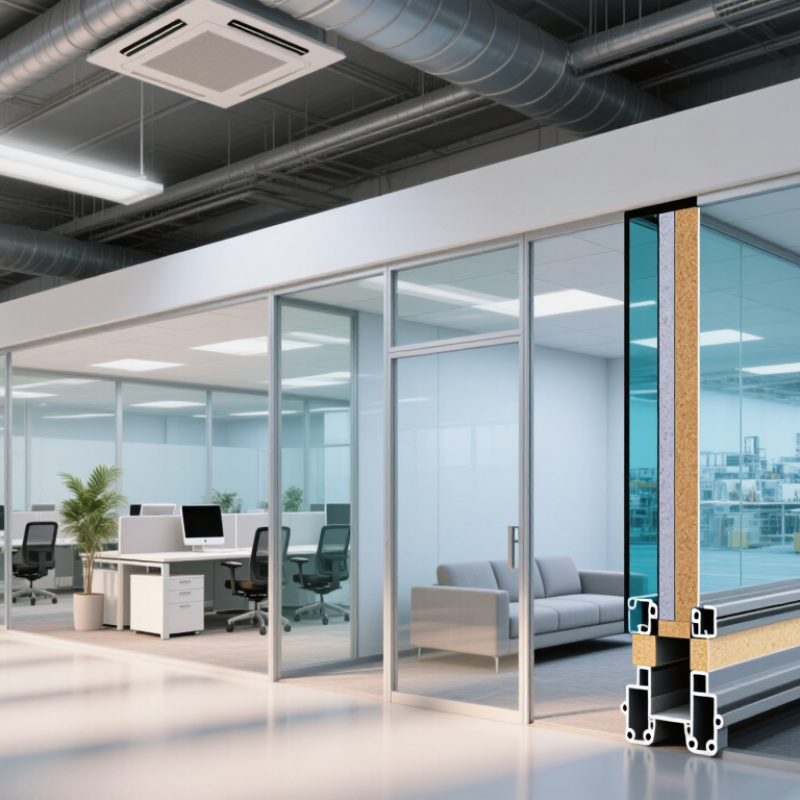
Acoustic glass partitions are interior wall systems designed to reduce speech, equipment noise, and meeting-room distractions while preserving daylight. They usually combine laminated acoustic glass, sealed frames, and carefully fitted doors. The glass alone cannot solve every sound problem. Gaps often matter more.

In office projects, I have seen a small door seal failure weaken an otherwise well-designed meeting room. A two-millimeter gap can carry voices into nearby workstations. Continuous seals, tight floor connections, and properly specified hardware deserve equal attention. Double-glazed systems can improve separation, especially when the air space is correctly designed. However, performance depends on glass thickness, framing, installation quality, and the surrounding ceiling and floor.

Acoustic ratings should be reviewed with real room conditions in mind. A laboratory result may not match a busy office with ventilation openings and shared structure. Speech privacy also depends on background noise, room layout, and occupancy. This part is often underestimated. I recommend checking test documentation, door ratings, seal details, and installation procedures before selecting a system. On site, a simple voice test can reveal obvious weaknesses, but it cannot replace professional measurement. Glass partitions bring light and visual connection, yet privacy may require blinds, patterned film, or smart glass. No partition is perfect. Even experienced teams sometimes focus on the glass and overlook the ceiling junction.
How to Evaluate China’s Acoustic Glass Partition Suppliers

Choosing among China’s top acoustic glass partition suppliers requires more than comparing online catalogs. Evaluate the complete wall system, not the glass alone. Ask for laboratory reports showing tested sound insulation, glass thickness, frame design, seals, and installation conditions. STC or equivalent ratings should match your project’s needs. A high number may describe an ideal test wall, not a finished office.

Reliable suppliers explain production controls clearly. Request factory photos, quality records, sample details, and references from similar commercial projects. Check whether the supplier can maintain consistent glass dimensions, edge quality, seal compression, and hardware alignment. Ask about tolerances and replacement procedures. A polished sample can mislead. Real performance often depends on small installation gaps.

Tips: Compare at least three suppliers using the same technical brief. Request a physical corner sample with glass, frame, seals, and door hardware. Confirm test standards, report dates, warranty terms, packaging, lead times, and installation support. Ask who handles defects after delivery. Visit the factory when practical, or arrange an independent inspection. Do not trust vague claims such as “soundproof” without measured data. My own evaluation would also include a weakness review: can the supplier explain failed tests, delayed shipments, or past corrections honestly? Perfect answers may deserve caution.

China Top 10 Acoustic Glass Partitions Suppliers? - How to Evaluate China’s Acoustic Glass Partition Suppliers

Supplier evaluation scorecard — a practical framework, not a verified ranking of named companies. Weights are suggested for comparison; acoustic performance must be confirmed for the complete partition system and the intended project conditions.

Evaluation dimension Suggested weight Evidence to request How to assess it
1. Tested acoustic performance 20% Full-system laboratory test report identifying the glass, framing, seals, joints, dimensions, and test configuration. Check that the reported rating is for the proposed assembly, not glass alone. Common rating methods include ISO 10140 with ISO 717-1, or ASTM E90 with ASTM E413. Compare ratings only when the same method and comparable configurations are used.
2. Test-report traceability 12% Complete report, laboratory identity and accreditation details, test date, specimen drawings, and product configuration. Confirm the report can be checked with the issuing laboratory and that the tested assembly matches the quotation. A laboratory’s accreditation scope should cover the relevant test method.
3. Glass and safety specification 10% Glass build-up, nominal thickness, safety-glazing type, edge treatment, and applicable product documentation. Verify compliance with the project’s local safety-glazing requirements. Confirm the offered glass build-up is the same as the one in the acoustic test report.
4. Perimeter sealing and interfaces 10% Details for head, base, wall junctions, gaskets, sealants, door interfaces, and service penetrations. Look for continuous, clearly specified seals and installation details. Gaps and poorly sealed interfaces can undermine the performance of the partition assembly.
5. Engineering and customization 10% Shop drawings, maximum panel and door dimensions, structural interface information, and details for project-specific conditions. Assess whether the supplier can document the proposed configuration and identify where a change may make existing test results inapplicable.
6. Manufacturing quality control 10% Inspection plan, material traceability, dimensional checks, glass inspection records, and non-conformance handling process. Ask how incoming materials, production steps, and finished assemblies are checked and recorded. Request sample inspection records relevant to the quoted product.
7. Installation method and support 8% Installation manual, site-readiness requirements, installer training options, and inspection or commissioning process. Check that installation instructions cover alignment, fixing, sealing, tolerances, and protection during construction. Clarify who is responsible for site work.
8. Delivery and export readiness 8% Written production and shipping schedule, packing method, shipment documents, and breakage or shortage procedure. Compare documented lead times and shipping responsibilities for the specific order. Confirm packaging is suitable for the transport route and handling plan.
9. Warranty and after-sales service 7% Written warranty terms, exclusions, claim process, response contact, and availability of replacement components. Compare coverage and claim responsibilities in writing. Check whether the warranty distinguishes product defects from installation or site-condition issues.
10. Commercial clarity and references 5% Itemized quotation, scope and exclusions, payment and delivery terms, and relevant project references that can be checked. Check that the offer clearly states what is included and that references concern comparable partition systems and project requirements.
Total suggested weighting 100% Score each criterion against the same project brief and retain supporting documents with the evaluation.

Note: Acoustic ratings describe performance under specified test conditions; results for different standards, specimen sizes, and partition configurations are not automatically interchangeable. Ask suppliers to confirm the tested system’s relevance to the project.

China’s Top 10 Acoustic Glass Partition Suppliers

China’s Top 10 Acoustic Glass Partition Suppliers

Choosing among China’s leading acoustic glass partition suppliers requires more than comparing catalogue claims. Buyers should request laboratory reports for the complete partition assembly, including glass, frame, seals, and joints.

ISO 10140-2 describes laboratory measurement of airborne sound insulation, while ISO 717-1 explains how results are rated. Ask for the tested configuration and its weighted sound reduction index, Rw. A glass-only result may not represent the installed wall. Small gaps matter.

The World Health Organization’s 2018 Environmental Noise Guidelines recommend keeping road-traffic noise below 53 dB Lden and 45 dB Lnight outdoors. These are exposure recommendations, not partition ratings, but they show why project context matters.

For offices, meeting rooms, and clinics, suppliers should clarify whether testing reflects the required privacy level and site conditions. Compare installation details, replacement support, and documented quality controls alongside acoustic figures.

A top-ten shortlist is useful, but public rankings rarely disclose comparable, independently verified test data. That part is less tidy. Check the evidence before treating any supplier ranking as definitive.

What Products and Services Do These Suppliers Provide?

China Top 10 Acoustic Glass Partitions Suppliers: What Products and Services Do These Suppliers Provide?

Acoustic glass partition suppliers typically provide laminated, double-glazed, and framed glass systems for offices, hotels, studios, and meeting rooms. Laminated glass uses an acoustic interlayer to reduce speech transfer between adjacent spaces. Double-glazed units create an air gap that can improve sound insulation. Some suppliers also offer switchable privacy glass, glass doors, sidelights, and matching ceiling connections. Clear, tinted, frosted, and digitally printed finishes support different interior requirements.

Their services often begin with site measurements, layout drawings, and technical consultations. Experienced teams can review wall dimensions, ceiling conditions, door positions, and expected noise sources. They may prepare CAD details, performance data, samples, and installation schedules. Many suppliers provide customized aluminum or steel frames, seals, hinges, handles, and door closers. Factory quality checks may include glass thickness, edge finishing, hardware alignment, and visual inspection. Installation support is also available, including delivery coordination and on-site guidance.

Acoustic ratings need careful interpretation. A laboratory result may not match a completed room. Gaps around doors, floors, and ceilings can weaken performance. I have seen attractive partitions fail because sealing details were overlooked. Suppliers should explain testing methods, installation limits, maintenance needs, and warranty terms clearly. Buyers should request project references and inspect sample joints before approving production. A lower quoted price may hide thinner glass or weaker hardware. That deserves a second look.

How to Select the Right Supplier for Your Project

Choosing an acoustic glass partition supplier starts with the room, not a catalog. List the noise sources, privacy needs, ceiling height, door count, and daily traffic. Ask for sound-insulation data for the complete system, including glass, frames, seals, and doors. A panel’s rating alone may not predict the result after installation. Request drawings, material specifications, lead times, and a clearly defined installation scope. Ask whether the supplier has completed similar offices or meeting rooms. A site survey can reveal uneven floors, cable routes, and tight access that affect cost and performance.

Tips: Compare suppliers using the same opening sizes and acoustic targets. Ask how gaps are sealed and who handles installation issues. Keep a sample of the proposed glass and finish. Small details matter.

Price is important, but check exclusions before choosing the lowest quote. Confirm how dimension changes are handled, and ask for maintenance guidance in writing. If test conditions are unclear, request a plain explanation. A polished brochure is not proof; even experienced teams can miss a sealing detail. I would check that part twice.

Acoustic Glass Partitions: What Sound Transmission Loss Means

A practical guide to interpreting acoustic performance when comparing suppliers.

The percentages are calculated from the sound transmission loss relationship: 10 dB corresponds to 10% of the incident sound energy transmitted; each additional 10 dB reduces that share by a factor of ten. These values explain the decibel scale—they are not performance ratings for specific partitions. When evaluating suppliers, request test reports for the complete partition system, including glass, framing, seals, and installation details.