Top 10 Rock Wool Sandwich Panel Manufacturers Worldwide
The global rock wool sandwich panel market is expanding as builders seek stronger fire resistance, reliable thermal performance, and faster installation. Yet choosing a manufacturer requires more than comparing product prices or catalog photographs. Core density, panel thickness, joint design, surface coatings, certification, and production consistency all influence real performance.
Building-envelope expert Joseph Lstiburek offers a useful principle: “Buildings should be dry by design.” This idea matters when evaluating every rock wool sandwich panel supplier. A panel may show excellent laboratory results, but poor storage, damaged edges, or careless joints can create weak points. Water stains around a fastener or a small gap between panels may become expensive problems later.
This Top 10 ranking examines manufacturers through practical and technical criteria. It considers fire-test evidence, insulation quality, structural options, environmental reporting, global availability, customization, and after-sales support. Manufacturing experience also matters. Automated cutting, controlled lamination, and consistent mineral wool density can reduce variation between batches.
No ranking is perfectly universal. A supplier that performs well in a cold warehouse project may not suit a humid coastal facility. Regional standards, transport distance, installer skill, and project budgets can change the final decision. That limitation deserves attention.
The strongest manufacturers combine dependable products with transparent documentation. They explain tested assemblies, not only attractive specifications. They also acknowledge where their systems need improvement. For architects, contractors, and buyers, that honesty may be as valuable as a high headline rating.
Definition and Role of Rock Wool Sandwich Panels
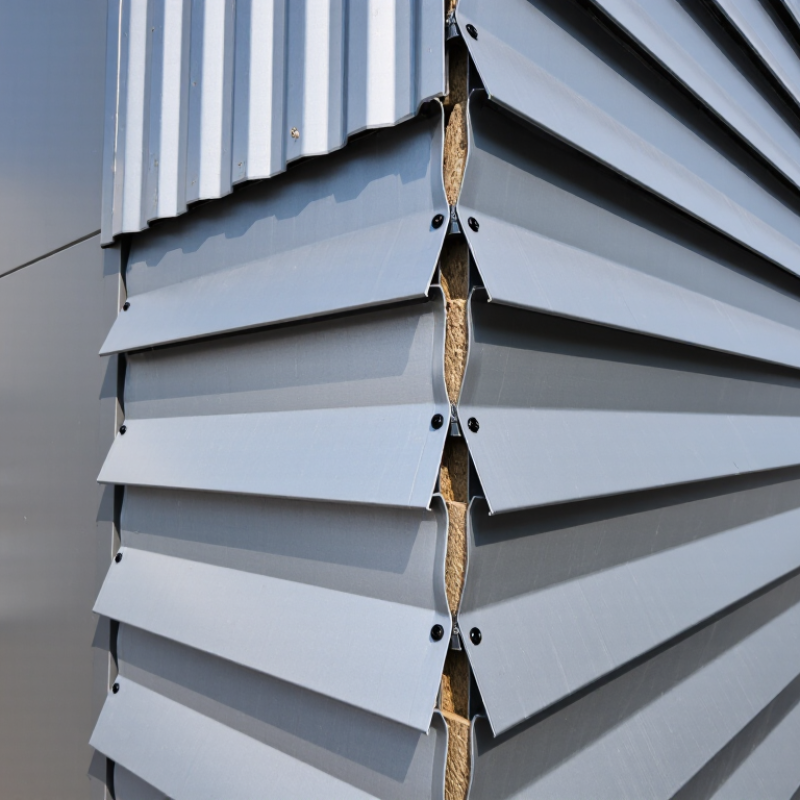
Rock wool sandwich panels are factory-made building elements with a mineral wool core between protective metal facings. Their role is practical: they combine insulation, fire resistance, acoustic control, and rapid installation. Typical mineral wool cores achieve thermal conductivity near 0.035–0.045 W/m·K, depending on density and testing conditions. Many certified assemblies also reach non-combustible classifications under EN 13501-1. Performance still depends on joints, fasteners, seals, and installation quality.
The need is substantial. The GlobalABC and UNEP 2023 Global Status Report states that buildings consumed about 34% of global energy in 2022 and produced approximately 37% of energy-related and process carbon emissions.
The IEA’s Energy Efficiency 2023 report also identifies building envelopes as important for reducing heating and cooling demand. In warehouses, factories, and cold-storage facilities, rock wool panels help stabilize indoor temperatures while limiting sound transmission from machinery and traffic. They can also slow heat transfer during a fire, giving occupants more time to respond.
The panel is not a magic shield. Moisture, damaged coatings, and poorly sealed connections can reduce service life. Designers should verify fire ratings for the complete wall or roof assembly, not the core alone. This detail is often overlooked. Product thickness, density, span, and local climate also change results. Better specifications require tested data, trained installers, and regular inspection records. The final performance belongs to the whole system.
Key Criteria for Comparing Global Manufacturers
Comparing global rock wool sandwich panel manufacturers requires more than checking price lists. Start with core density, panel thickness, thermal conductivity, and fire-performance data. These figures affect insulation, structural behavior, and long-term safety. Ask for current technical sheets, not copied catalog pages. Small details matter.
Manufacturing consistency Manufacturing consistency is equally important. Request batch records, factory quality procedures, and independent laboratory reports. Check whether test methods match your project’s local requirements. Inspect joint design, coating thickness, flatness, and edge protection. A panel may perform well in a laboratory but fail during careless installation.
Delivery and technical support Delivery capacity also deserves attention. Confirm production lead times, packaging methods, replacement procedures, and technical support across borders.
Experience can reveal weaknesses that brochures hide. Speak with contractors who have handled similar climates and building sizes. Review completed projects, especially those exposed to humidity, temperature changes, or heavy wind. A low quotation may seem attractive; our earlier comparisons sometimes focused too narrowly on purchase cost. That was a mistake. Freight, storage, cutting waste, and delayed replacements can change the final budget. Manufacturer credibility should rest on traceable evidence, responsive communication, and realistic performance claims. Vague promises are warning signs. So are missing test dates.
Top 10 Rock Wool Sandwich Panel Manufacturers Worldwide
Top 10 Rock Wool Sandwich Panel Manufacturers Worldwide
The top 10 rock wool sandwich panel manufacturers worldwide are best compared through measurable performance, not polished brochures. Experienced buyers examine core density, thermal conductivity, fire resistance, panel thickness, and joint accuracy. A 100 mm panel may look similar across suppliers, yet its tested performance can differ greatly.
Reliable manufacturers maintain controlled production lines and document each batch. Their quality systems should cover steel coating thickness, adhesive coverage, curing temperature, and dimensional tolerances. Independent fire and thermal tests add credibility. Factory audits can reveal practical details, such as damaged edges, inconsistent packaging, or poorly protected corners. Small faults often create installation delays.
The strongest manufacturers provide technical drawings, installation guidance, test reports, and responsive after-sales support. They also adapt products to cold storage, industrial buildings, clean areas, and high-humidity regions. Shipping experience matters too. Panels need stable wrapping and moisture protection during long sea journeys. Still, no ranking is perfect. Regional standards, project budgets, and climate conditions can change the final choice. A manufacturer with excellent fire-test results may not offer the best delivery service. Buyers should request recent samples, verify certificates, and compare actual project references before signing a contract.
Top 10 Rock Wool Sandwich Panel Manufacturers Worldwide - Top 10 Rock Wool Sandwich Panel Manufacturers Worldwide
| Rank | Anonymous Manufacturer Profile | Primary Market Region | Core Density Range
(kg/m³) | Thermal Conductivity λD
(W/m·K) | Available Thickness
(mm) | Typical Fire Classification | Standard Panel Width
(mm) | Common Compliance Standards |
| 1 | Manufacturer Profile 01 | Western Europe | 90–120 | 0.036–0.040 | 50–200 | A2-s1,d0 | 1,000–1,200 | EN 14509, EN 13501-1, ISO 9001 |
| 2 | Manufacturer Profile 02 | Northern Europe | 95–125 | 0.035–0.039 | 60–240 | A2-s1,d0 | 1,000–1,200 | EN 14509, EN 13501-1, CE marking |
| 3 | Manufacturer Profile 03 | Central Europe | 100–130 | 0.036–0.041 | 50–250 | A2-s1,d0 | 1,000–1,150 | EN 14509, EN 13501-1, ISO 14001 |
| 4 | Manufacturer Profile 04 | East Asia | 90–120 | 0.037–0.042 | 50–200 | A2-s1,d0 / Class A | 950–1,200 | EN 14509, ASTM E84, ISO 9001 |
| 5 | Manufacturer Profile 05 | North America | 100–150 | 0.036–0.042 | 75–250 | Class A | 1,000–1,200 | ASTM E84, ASTM C612, FM approvals where applicable |
| 6 | Manufacturer Profile 06 | Middle East | 90–120 | 0.037–0.041 | 50–200 | A2-s1,d0 / Class A | 1,000–1,200 | EN 14509, EN 13501-1, ASTM E84 |
| 7 | Manufacturer Profile 07 | Southeast Asia | 85–115 | 0.038–0.043 | 50–200 | A2-s1,d0 / Class A | 950–1,200 | EN 14509, ASTM E84, ISO 9001 |
| 8 | Manufacturer Profile 08 | South Asia | 90–125 | 0.038–0.043 | 50–200 | A2-s1,d0 / Class A | 1,000–1,200 | EN 14509, ASTM E84, local building codes |
| 9 | Manufacturer Profile 09 | Eastern Europe | 95–130 | 0.036–0.041 | 60–250 | A2-s1,d0 | 1,000–1,200 | EN 14509, EN 13501-1, CE marking |
| 10 | Manufacturer Profile 10 | Latin America | 90–125 | 0.038–0.043 | 50–200 | Class A / A2-s1,d0 | 1,000–1,200 | EN 14509, ASTM E84, ISO 9001 |
Note: Company identities and brand-specific information are intentionally omitted. Technical figures represent commonly published market ranges for mineral wool sandwich panels; final values should be verified against the applicable product declaration and project specification.
Product Features, Certifications, and Market Coverage
Top 10 Rock Wool Sandwich Panel Manufacturers Worldwide
Rock wool sandwich panels combine mineral wool insulation with protective metal facings. Their main strengths include fire resistance, acoustic control, and dimensional stability.
Experienced manufacturers usually offer various core densities and panel thicknesses. These options support warehouses, cleanrooms, cold storage facilities, and industrial partitions. A dense core can improve fire performance. However, it may increase handling weight.
Reliable suppliers provide technical data, installation manuals, and traceable production records.
ISO 9001 certification can indicate controlled quality procedures. EN 14509 and ASTM-related testing may support performance claims in different markets. Fire classifications under EN 13501-1 are also important for project approval.
Certificates must match the exact panel construction. A general factory certificate is not enough.
Market coverage often includes Europe, Asia, the Middle East, Africa, and the Americas.
Regional suppliers may understand local climate risks better. Coastal projects need corrosion-resistant facings and careful joint sealing. Cold regions require verified thermal calculations and stable connection details.
Export experience can simplify packaging, customs documents, and technical support. Yet, market reach does not guarantee consistent service.
Factory audits, sample checks, and reference projects remain necessary. Some product brochures look impressive but omit long-term maintenance limits. That omission deserves closer review before procurement.
How to Select a Suitable Rock Wool Panel Manufacturer
Choosing a suitable rock wool sandwich panel manufacturer requires more than comparing prices in a Top 10 list. The International Energy Agency reports that buildings consume about 30% of global final energy. Therefore, thermal performance deserves careful checking. Request declared lambda values, core density, panel thickness, and tested U-values. Confirm that fire performance follows EN 13501-1 or the relevant local standard. A reliable manufacturer should provide current test reports, factory quality records, and traceable batch numbers.
Production consistency matters on site. Inspect panel edges, joint tolerances, coating adhesion, and protective film quality. Small gaps around a cold-room panel can create visible condensation and expensive heat loss. Ask whether the manufacturer controls rock wool orientation, adhesive application, and curing conditions. Third-party certification is useful, but it does not replace factory inspection. A clean showroom can still hide weak process control. No supplier is perfect.
Tips: Ask for three recent project references with similar climate and building use. Compare lead times, replacement procedures, packaging, and installation guidance. Check whether technical staff can review drawings before production. The 2023 UNEP Global Status Report notes that buildings remain responsible for a major share of global energy use and emissions. This makes lifecycle performance more important than a low purchase price. I would also request a physical sample and cut it carefully. The internal structure often reveals more than polished sales literature.
Top 10 Rock Wool Sandwich Panel Manufacturers Worldwide: How to Select a Suitable Rock Wool Panel Manufacturer
Compare commonly specified rock wool core thicknesses with their indicative core-only thermal transmittance. The U-values are calculated from λ = 0.035 W/m·K using U ≈ λ ÷ thickness; actual panel performance also depends on facings, joints, fasteners, moisture, and thermal bridges.
When evaluating manufacturers, request verified thermal-conductivity data, fire-test classifications, acoustic results, structural load tables, dimensional tolerances, corrosion protection details, quality certificates, and project references. A lower U-value generally indicates better thermal insulation, but the final selection should match the required fire, structural, acoustic, and environmental performance.

