Get an estimate

China Top 10 Wear Resistant Solid Wheels Suppliers

China has become a significant sourcing base for industrial wheels, especially for demanding warehouse, factory, and material-handling environments. This guide introduces China Top 10 Wear Resistant Solid Wheels Suppliers through practical purchasing criteria, not promotional claims.

The evaluation considers rubber or polyurethane formulation, load capacity, wheel hardness, temperature tolerance, and rolling resistance. It also examines machining accuracy, bearing quality, tread bonding, and dimensional consistency. These details matter when wheels travel across concrete floors, metal tracks, or uneven loading areas. A wheel may look durable in a catalog. Real performance depends on compounds, assembly, and working conditions.

Supplier experience is reviewed through manufacturing capabilities, product applications, export history, and available technical documentation. Buyers should request test reports, sample wheels, inspection records, and clear warranty terms. Factory visits can reveal pressing equipment, curing controls, storage conditions, and final inspection practices. Small details often expose larger risks.

No ranking is permanently perfect. Product lines change, and supplier performance can vary between batches. That limitation deserves attention. Therefore, this overview should support further verification rather than replace it. Each shortlisted manufacturer is considered for communication quality, engineering support, customization ability, and evidence of consistent production. Reliable suppliers should explain their wheel selection clearly, including hardness ranges, axle dimensions, floor compatibility, and expected service life. The right choice balances price with downtime prevention, operator safety, and long-term maintenance costs. Buyers should compare actual working conditions before placing large orders. Performance comes first.
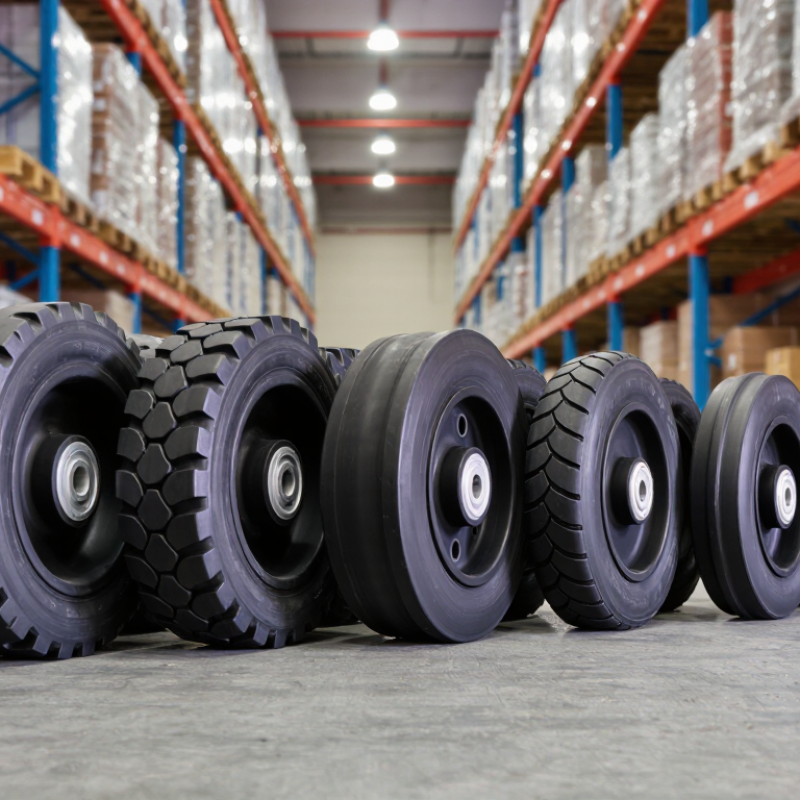
China Top 10 Wear Resistant Solid Wheels Suppliers

What Are Wear-Resistant Solid Wheels?

Wear-Resistant Solid Wheels are wheels designed to resist abrasion, cutting, and permanent deformation without pneumatic air. They usually combine solid rubber, polyurethane, or engineered elastomers with a metal core. No punctures. That matters in warehouses, factories, carts, and airport equipment where sharp debris can damage ordinary tires. The European standard EN 12527 and related test methods evaluate rolling resistance, load performance, and durability. However, “wear-resistant” is not a perfectly standardized marketing term.

Material choice changes real performance. Polyurethane wheels often provide low rolling resistance and strong abrasion resistance on smooth concrete. Solid rubber wheels usually absorb shocks better on uneven floors. A 2023 industrial wheel market analysis estimated that material-handling applications represented a major share of demand, driven by warehouse automation and higher internal transport volumes.

Yet laboratory results can mislead. A wheel showing excellent abrasion loss in ASTM D5963 testing may still fail early under side loads, oil exposure, or rough expansion joints.

In practical inspections, check the tread after several operating shifts. Look for flat spots, edge tearing, embedded metal, and unusual vibration. Load ratings should be verified under the actual wheel arrangement, not copied from a catalog. ISO 22883 testing guidance also shows why speed, temperature, and floor condition influence results. A small wheel may carry the stated load, but it can roll badly. Performance is rarely perfect.

How to Evaluate China’s Solid Wheel Suppliers

China Top 10 Wear Resistant Solid Wheels Suppliers: How to Evaluate China’s Solid Wheel Suppliers

Supplier evaluation should begin with performance evidence, not catalogue photos. China’s National Bureau of Statistics reported approximately 987.7 million rubber tires produced in 2023, up 15.3% year on year. This scale shows manufacturing strength, but it does not prove solid-wheel quality. Ask for batch traceability, compound specifications, load ratings, and test records. Small details matter.

For warehouse use, compare abrasion loss, compression set, Shore A hardness, rolling resistance, and temperature limits. Request samples from the same production batch. Measure tread width and runout with basic workshop tools. Then test the wheels under realistic loads, uneven floors, and repeated turns. The ASTM F1805 standard offers a useful reference for tire uniformity testing, although buyers should confirm the correct standard for their application. Test before scale.

A supplier should explain its rubber formulation, curing process, steel-ring tolerance, and final inspection rate. Factory audits should include storage conditions and rejected-product handling. Intertek’s 2024 quality management guidance emphasizes traceability and documented corrective actions as practical indicators of supplier control. Price still tempts buyers. That is risky. A lower quotation may hide shorter service life, inconsistent hardness, or weak after-sales support. A common mistake is trusting one successful sample. Require independent verification, written warranty terms, and replacement procedures before placing a larger order. Industry reports provide direction, not certainty. Performance data must match your floor, load, speed, and working temperature.

China’s Top 10 Wear-Resistant Solid Wheel Suppliers

China’s Top 10 Wear-Resistant Solid Wheel Suppliers serve warehouses, factories, carts, and material-handling equipment. Their products commonly use polyurethane, rubber, nylon, or layered compounds. Each material behaves differently on concrete, steel plates, ramps, and uneven floors.

A reliable supplier should provide clear load ratings, wheel hardness, temperature limits, and axle dimensions. Factory experience matters here. During equipment checks, I have found that a wheel can look strong but wear quickly under side loads. That gap matters. Buyers should request abrasion-test records, production traceability, and samples before placing large orders. Independent inspection can also verify hardness, bonding quality, and running performance.

The strongest suppliers usually maintain documented quality systems and consistent mold control. They can adjust tread design for noise reduction, chemical exposure, or frequent turning. However, a top-ten list is never permanent. Prices, materials, production capacity, and export service can change during the year. Some supplier information may also come from incomplete public records. Buyers should recheck certifications, delivery history, warranty terms, and replacement support before making a decision. Small details matter. A practical comparison should include total service life, not only the initial purchase price.

Product Comparison: Materials, Designs, and Applications

When comparing the top 10 wear-resistant solid wheel suppliers, materials reveal more than marketing claims. Polyurethane wheels suit smooth factory floors, offering low noise and strong abrasion resistance. Nylon handles moisture and many chemicals, but may mark or damage delicate flooring. Forged steel supports extreme loads and heat, although it can create harsh vibration. Phenolic wheels remain useful near high-temperature equipment, but brittle edges may fail under impact.

Design matters just as much. A sealed precision bearing reduces rolling resistance around automated carts and warehouse vehicles. A wider tread spreads weight across concrete, while a crowned tread improves turning in narrow aisles. According to a 2024 MarketsandMarkets report, the material handling equipment market is projected to grow at about 5% annually through the decade. That growth increases demand for wheels that combine load capacity, service life, and quieter movement. Small details count: a 125 mm wheel with a 32 mm tread behaves differently from a narrow wheel under the same load.

Applications should guide supplier evaluation. Use polyurethane for indoor picking carts, steel for foundry transfer equipment, and high-temperature phenolic wheels for ovenside handling. Load ratings must include the cart, cargo, acceleration, and uneven floors. Standards such as EN 12527 and EN 12532 provide useful test references, but laboratory results do not perfectly predict every workplace. I have seen buyers overvalue hardness. That choice can reduce wear while increasing floor damage and operator fatigue. Selection remains a compromise, not a simple ranking.

China Top 10 Wear Resistant Solid Wheels Suppliers - Product Comparison: Materials, Designs, and Applications

Comparative overview of common wear-resistant solid-wheel product categories manufactured and supplied in China. Specifications are representative industry ranges and should be confirmed against the final product drawing and operating conditions.

No. Product Category Tread Material Core / Wheel Body Common Design Typical Diameter Typical Load Range Floor Compatibility Typical Applications Wear-Resistance Characteristics
01 Heavy-Duty Polyurethane Solid Wheel Cast polyurethane
High-hardness elastomer
Machined steel or cast-iron core Flat tread; roller-bearing or plain-bore options 80–300 mm 150–2,000 kg per wheel Concrete, epoxy, tile, and smooth industrial floors Material carts, platform trucks, warehouse equipment, and AGV units High abrasion resistance, low rolling resistance, good resistance to oils and many chemicals, and reduced floor marking.
02 Elastic Solid Rubber Wheel Natural or synthetic rubber Steel, aluminum, or reinforced polymer core Rounded tread; shock-absorbing solid construction 75–250 mm 80–800 kg per wheel Uneven concrete, ramps, outdoor paving, and mixed indoor surfaces Industrial carts, service trolleys, equipment stands, and transport dollies Good impact absorption and quiet movement; generally suitable where vibration control is more important than maximum load capacity.
03 Phenolic Resin High-Temperature Wheel Phenolic resin
Compressed laminate construction
Integrated resin body or metal-reinforced hub Rigid flat tread; heat-resistant bearing assembly 80–200 mm 100–700 kg per wheel Hard, smooth, dry floors; not recommended for rough surfaces Bakery ovens, food-processing lines, autoclaves, and industrial heat-transfer carts Low water absorption and strong heat performance; commonly selected for intermittent high-temperature service.
04 Forged Steel Solid Wheel Hardened steel Forged or machined carbon-steel body Flanged, crowned, or flat tread; heavy-duty axle bore 100–500 mm 1,000–10,000 kg per wheel Steel rails, cast floors, concrete, and other hard surfaces Rail-guided transfer carts, foundry equipment, coil handling, and heavy industrial machinery Very high static capacity and resistance to cutting, crushing, and metal debris; produces more noise and floor impact than resilient materials.
05 Nylon Solid Wheel Cast or molded nylon Single-piece engineered polymer body Flat or crowned tread; sealed or plain-bore design 50–250 mm 100–1,200 kg per wheel Clean, smooth, moisture-resistant floors Food plants, chemical facilities, warehouse carts, and cleanroom material handling Resistant to water, many chemicals, and corrosion; hard tread can be noisy and may mark delicate floors under high point loads.
06 Polyurethane-on-Steel Wheel Bonded polyurethane layer Steel or ductile-iron center Precision-machined tread; crowned or cylindrical profile 100–400 mm 500–5,000 kg per wheel Concrete, coated floors, and steel plates AGV systems, automated storage equipment, transfer carts, and powered material-handling vehicles Combines a high-load metal core with resilient polyurethane contact; offers good traction, wear life, and lower noise than steel wheels.
07 Heat-Resistant Silicone Rubber Wheel Silicone rubber Aluminum or stainless-steel core Solid resilient tread; sealed high-temperature bearing option 60–200 mm 50–500 kg per wheel Smooth indoor floors and heat-exposed production areas Ovens, drying tunnels, glass processing, textile machinery, and laboratory equipment Maintains flexibility over a broad temperature range and resists aging; usually selected for moderate loads and clean environments.
08 Metal-Detectable Solid Polymer Wheel Food-grade polyurethane or polymer compound Stainless-steel or detectable polymer core Hygienic smooth tread; sealed bearing and washdown-ready design 80–200 mm 100–800 kg per wheel Epoxy, polyurethane, stainless-steel, and tiled floors Food processing, beverage production, pharmaceutical, and hygienic logistics areas Designed for frequent cleaning and contamination control; selected materials may be detectable by standard inspection systems.
09 Anti-Static Solid Wheel Conductive or dissipative polyurethane Steel, aluminum, or conductive polymer core Low-resistance tread; sealed precision bearing 75–250 mm 100–1,000 kg per wheel ESD flooring, epoxy, concrete, and smooth industrial floors Electronics assembly, hospitals, laboratories, cleanrooms, and automated handling systems Helps dissipate electrostatic charge while providing improved abrasion resistance and quieter operation than metal wheels.
10 Heavy-Duty Molded Composite Wheel Glass-fiber-reinforced nylon or composite resin Reinforced one-piece composite body Wide tread; corrosion-resistant plain bore or roller bearing 100–300 mm 300–2,500 kg per wheel Wet concrete, chemical-resistant coatings, and general industrial floors Corrosive environments, wastewater facilities, chemical plants, warehouses, and outdoor equipment Low maintenance and corrosion resistance with a favorable strength-to-weight ratio; performance depends on humidity, temperature, and chemical exposure.
Selection note: Actual capacity depends on wheel diameter, tread width, bearing type, travel speed, duty cycle, temperature, floor condition, shock loading, and the number of wheels sharing the load.

How to Choose the Right Chinese Solid Wheel Supplier

Choosing a Chinese solid wheel supplier requires more than comparing catalogue prices. Start with your working conditions: load per wheel, floor type, speed, temperature, chemicals, and daily operating hours. A wheel for warehouse equipment may fail quickly on rough concrete if its tread compound is too soft.

Ask for measurable specifications, not broad claims. Confirm wheel diameter, width, hub dimensions, bearing type, hardness range, and tested load capacity. Request material information for polyurethane, rubber, or nylon compounds. Reliable suppliers should provide inspection records, sample approval procedures, and traceable batch information. Factory photographs help, but an independent audit is stronger evidence.

Communication also reveals manufacturing discipline. Can the supplier explain tolerance control and replacement procedures clearly? Check whether samples match mass production. Discuss packaging, lead times, minimum order quantities, and warranty terms before payment. A capable supplier should identify risks instead of promising everything.

Do not select the lowest quotation too quickly. A cheaper wheel may create more noise, floor marks, or downtime. I have found that testing one sample under actual loads is more useful than reading ten polished product pages. Still, one test can mislead if it runs for only a few hours. Recheck performance after repeated turning, braking, and uneven-floor movement. Supplier evaluation is not flawless, and your own test conditions may need improvement.

Hardness is one of the practical technical factors when comparing solid wheel suppliers. Typical values vary by formulation, wheel design, and test method, so buyers should verify the supplier’s technical datasheet and confirm whether the stated value follows ASTM D2240 or ISO 868.