Get an estimate

What Are the Best Smart Door Lock Suppliers in China?

Choosing the right Smart Door Lock supplier in China requires more than comparing factory prices. The strongest suppliers combine dependable hardware, secure software, tested production, and responsive support. Buyers should examine OEM and ODM experience, product certifications, factory controls, and export records before signing any agreement.

Bruce Schneier, a respected security technologist, says, “Security is a process, not a product.” This principle matters when evaluating Chinese smart lock manufacturers. A reliable supplier should explain firmware updates, data protection, user permissions, and emergency access clearly. It should also provide realistic battery claims, mechanical override options, and documented testing procedures. Good answers matter.

This guide compares leading Smart Door Lock suppliers through practical purchasing criteria. These include fingerprint accuracy, keypad durability, app stability, cloud security, and compatibility with major smart home platforms. Supplier communication also deserves attention. Delayed replies may signal future service problems. However, a polished website proves very little. That is an uncomfortable truth.

Factory audits, sample testing, and independent verification can reveal weaknesses hidden in product brochures. Buyers should request production samples before placing large orders. They should test low-battery alerts, offline access, installation tolerance, and recovery after connection failure. No supplier is perfect. Even established manufacturers may struggle with firmware consistency or after-sales coordination. That limitation deserves honest consideration.

By examining product quality, technical expertise, manufacturing capacity, and long-term reliability, this article identifies China’s most credible Smart Door Lock suppliers. It does not treat the lowest quotation as the best choice. Security equipment should support real homes, hotels, offices, and property managers. The right partner must deliver beyond the first shipment.
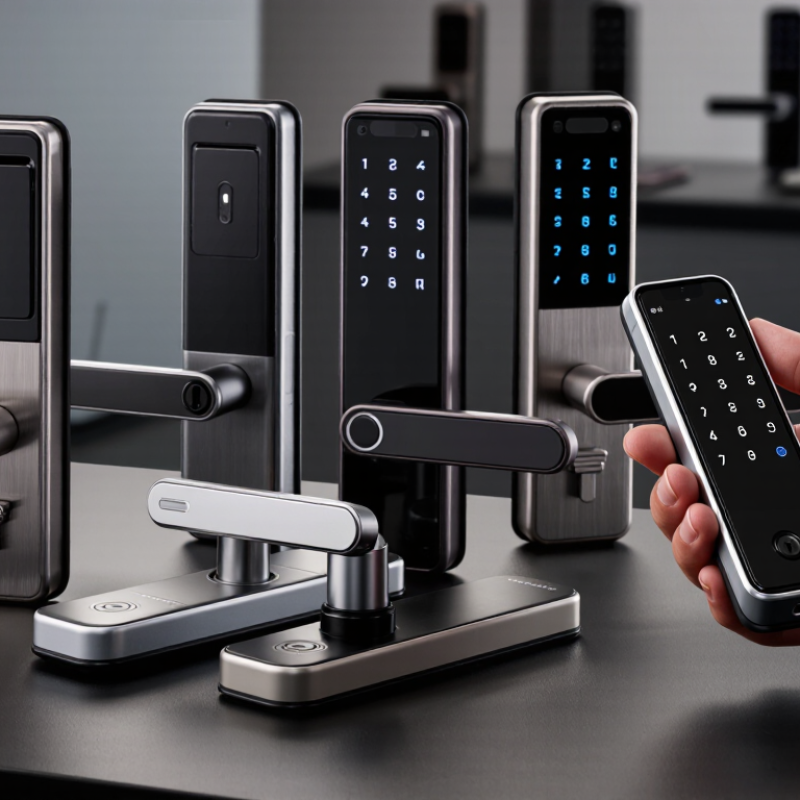
What Are the Best Smart Door Lock Suppliers in China?

What Defines a Reliable Smart Door Lock Supplier in China?

A reliable smart door lock supplier in China should prove more than production capacity. MarketsandMarkets reported that the global smart lock market could grow from USD 2.7 billion in 2023 to USD 5.2 billion by 2028. This growth attracts capable factories and inexperienced sellers. Buyers should request factory audit records, recent production photos, and traceable component lists. A polished showroom proves little.

Engineering evidence matters. The supplier should provide test results for battery endurance, salt spray, drop resistance, and repeated unlocking cycles. Ask whether testing follows recognized standards, such as ANSI/BHMA or EN requirements. Cybersecurity also deserves attention. NIST’s Cybersecurity Framework 2.0 emphasizes governance, protection, detection, and recovery. A dependable supplier should explain firmware updates, access permissions, encryption, and account recovery in plain language. Vague answers are warning signs.

Service quality becomes visible after installation. Confirm spare-part availability, response times, software support, and warranty procedures before signing an order. Sample locks should be tested on real doors, not only on a display panel. Check fingerprint recognition with wet fingers, low battery alerts, and emergency power access. Small failures matter. A supplier may offer impressive specifications but still lack disciplined after-sales management. That weakness is easy to miss during negotiation, and costly to discover later.

Key Types of Smart Door Locks Made by Chinese Suppliers

Key Types of Smart Door Locks Made by Chinese Suppliers

Chinese smart door lock suppliers produce several designs for apartments, offices, hotels, and modern homes. Keypad locks use PIN codes and offer quick entry without physical keys. They are practical for rental properties, although shared codes require regular changes. Fingerprint locks identify users through biometric sensors and usually provide faster access. However, wet fingers, dust, or poor placement can reduce recognition accuracy.

Bluetooth and Wi-Fi locks connect with mobile applications for remote control, entry records, and temporary permissions. Bluetooth models often consume less power because they work over a shorter range. Wi-Fi versions support remote monitoring but need stable networks and stronger security settings. RFID card locks remain common in hotels and serviced apartments. Their operation is simple, but lost cards must be disabled promptly. Some Chinese manufacturers combine fingerprints, PIN codes, cards, and mechanical keys in one hybrid lock.

Material selection matters as much as software. Zinc alloy or stainless-steel bodies can improve resistance to daily impact and humidity. A tested emergency power interface is also essential when batteries fail. Suppliers should provide clear information about encryption, firmware updates, battery life, and installation dimensions. These details reveal manufacturing discipline. The cheapest model may not be the most reliable choice. Field conditions are often messier than product demonstrations. Door alignment, temperature changes, and user habits can expose weaknesses that specifications overlook. Auditing samples before bulk purchasing remains a sensible step.

What Are the Best Smart Door Lock Suppliers in China? – Key Types of Smart Door Locks Made by Chinese Suppliers
Smart Door Lock Type Typical Door Application Common Unlocking Methods Typical Construction Connectivity Options Power Configuration Typical Features Best-Fit Markets and Projects
Fingerprint Deadbolt Residential exterior doors fitted with a standard single-cylinder deadbolt Fingerprint PIN code Mechanical key Mobile app Aluminum alloy or zinc alloy exterior housing with a motorized deadbolt mechanism Bluetooth; optional Wi-Fi through a gateway; some models support wireless local protocols Battery-powered, commonly using four AA batteries or an equivalent rechargeable battery pack Auto-locking, low-battery warning, temporary access codes, passage mode, and tamper alarm Single-family homes, apartments, rental properties, and small offices
Smart Lever Handle Lock Interior or exterior doors using a tubular latch and lever-handle format Fingerprint PIN code RFID card Key Metal lever handle, electronic escutcheon, tubular latch, and internal motor or clutch Bluetooth; optional Wi-Fi gateway for remote management Battery-powered, generally designed for low-voltage operation One-touch entry, user management, audit records, privacy mode, and emergency mechanical override Bedrooms, offices, serviced apartments, and residential renovation projects
Smart Mortise Lock Doors requiring a full mortise lock body installed inside the door edge Fingerprint PIN code RFID card App Key Zinc alloy or aluminum alloy exterior with a multi-point or single-latch mortise case Bluetooth, Wi-Fi gateway, and selected wireless integrations Battery-powered; some commercial versions use wired low-voltage power with battery backup Automatic deadbolting, door-state sensing, anti-panic options, passage mode, and access logs Hotels, apartments, villas, offices, and new-build residential projects
Hotel RFID Smart Lock Guest-room doors and selected staff-only doors in hospitality properties 13.56 MHz RFID card Mobile credential Mechanical key Metal escutcheons paired with hotel-style mortise cases and RFID reading modules Offline RFID; optional Bluetooth and property-management-system integration Battery-powered, with low-battery alerts and emergency external power contacts on some models Card issuing, room-based permissions, entry-event records, privacy indication, and audit management Hotels, hostels, serviced apartments, and student accommodation
Push-Pull Smart Lock Main entrances and high-traffic doors where users prefer a push-pull operation Fingerprint PIN code RFID card App Integrated electronic body with motorized latch or mortise mechanism and a push-pull handle Bluetooth; optional Wi-Fi gateway; some versions support remote administration Rechargeable battery or replaceable batteries, depending on the model One-step opening, automatic locking, door sensor, indoor privacy button, and forced-entry alert Modern apartments, villas, offices, and premium residential developments
Sliding Door Smart Lock Aluminum, glass, or wooden sliding doors with compatible lock profiles PIN code Fingerprint RFID card App Compact metal housing adapted to sliding-door mortise or hook-bolt mechanisms Bluetooth; optional Wi-Fi gateway Battery-powered, commonly with a rechargeable or replaceable battery system Hook-bolt control, auto-locking, door-position detection, temporary codes, and emergency release Balconies, offices, apartments, villas, and commercial glass-door applications
Glass Door Smart Lock Frameless or framed tempered-glass swing doors, subject to compatible hardware dimensions PIN code RFID card Fingerprint App Clamping or surface-mounted metal body designed to avoid drilling in selected installations Bluetooth; optional Wi-Fi or access-control gateway Battery-powered or wired low-voltage power, depending on installation requirements Glass-door compatibility, access scheduling, door-status monitoring, and administrator control Offices, showrooms, retail stores, meeting rooms, and commercial interiors
Rim-Mounted Smart Lock Doors with a surface-mounted rim lock or installations where mortise modification is limited PIN code Fingerprint RFID card Key Surface-mounted metal enclosure connected to a rim latch or rim cylinder mechanism Bluetooth; optional Wi-Fi gateway Battery-powered, with emergency mechanical or external power access on selected designs Faster retrofit installation, auto-locking, temporary credentials, and low-battery notification Retrofit housing, rental properties, offices, and doors with limited internal cavity space
Commercial Access-Control Lock Office, institutional, and controlled-entry doors requiring centralized administration RFID card PIN code Mobile credential Biometrics Heavy-duty metal housing with electric mortise, cylindrical, or panic-hardware compatibility Wired Ethernet or RS-485; wireless options may include Bluetooth, Wi-Fi, or other access-control networks Wired low-voltage power, often with backup power provisions Centralized user control, time zones, event logs, anti-passback options, and integration with access software Corporate offices, schools, healthcare facilities, warehouses, and mixed-use buildings
Interconnected Smart Lock Residential or hospitality doors where the deadbolt and latch operate as one coordinated unit Fingerprint PIN code RFID card App Key Integrated deadbolt-and-latch assembly with electronic interior and exterior trim Bluetooth; optional Wi-Fi gateway and smart-home integration Battery-powered; some designs include rechargeable battery support Coordinated locking, automatic relocking, activity records, indoor thumb-turn, and emergency override Residential entrances, hospitality rooms, rental apartments, and smart-home projects
Note: Specifications, door compatibility, connectivity, certifications, and installation requirements vary by model. Buyers should confirm the required door thickness, backset, lock-body dimensions, fire-rating requirements, local radio regulations, and access-control integration before placing an order.

How to Evaluate Chinese Smart Door Lock Manufacturers

Choosing a Chinese smart door lock manufacturer requires more than comparing factory prices. MarketsandMarkets estimated the global smart lock market at about USD 2.7 billion in 2023, with strong growth expected through 2028. That growth attracts capable factories, but also inexperienced assemblers. Request a live factory video, production records, and recent export references. A polished showroom proves little.

Inspect the lock in practical conditions. Ask for cycle-test results, battery-life measurements, emergency power options, and failure rates. The manufacturer should explain its testing against relevant standards, such as EN 14846 or UL 294, where applicable. Check whether the mortise, cylinder, and outdoor keypad tolerate dust, moisture, and repeated impact. Small details matter. Loose screws matter.

Cybersecurity requires equal attention. Ask how the supplier protects fingerprints, access logs, mobile credentials, and cloud connections. NIST SP 800-63B offers useful guidance on digital authentication and credential security. Review the firmware-update process, vulnerability response time, data storage location, and account recovery procedure. Matter adoption may improve interoperability, but certification must be verified, not assumed. Request a pre-production sample and test it for several weeks. My own evaluation mistake would be trusting a successful demonstration too quickly. A lock can open perfectly in a meeting room and still fail after cold mornings, weak batteries, or an unstable network. Check the uncomfortable cases.

Top Regions and Manufacturing Hubs for Smart Door Locks

What Are the Best Smart Door Lock Suppliers in China?

China’s strongest smart door lock suppliers cluster around the Pearl River Delta and Yangtze River Delta. Guangdong, especially Shenzhen and Dongguan, offers dense electronics, molding, battery, and assembly networks. Zhejiang and Jiangsu provide strong hardware, machining, and appliance supply chains. Ningbo also supports metal components and export logistics. According to Grand View Research, the global smart lock market was valued at about USD 2.8 billion in 2023. It is projected to grow rapidly through 2030.

Regional specialization matters. Guangdong factories often respond quickly to firmware changes and custom app requirements. Zhejiang suppliers may show deeper experience with cylinders, handles, and zinc-alloy bodies. The China Chamber of Commerce reports that small and medium manufacturers remain important in China’s hardware export ecosystem. This creates choice, but also uneven quality. A polished showroom proves little.

Practical evaluation should include factory audits, production records, sample testing, and after-sales response times. Check water resistance, battery endurance, emergency power input, fingerprint accuracy, and mechanical override performance. Ask for test reports from recognized laboratories, not screenshots alone. In my sourcing experience, the weakest point is often software maintenance after shipment. Suppliers should explain update control, data protection, and spare-part availability clearly. Do not select only by unit price. A cheaper lock can require costly replacements, delayed firmware fixes, and complicated warranty handling.

Top Chinese Manufacturing Hubs for Smart Door Locks

Guangdong leads China’s smart door lock supply chain because of its strong electronics, connectivity, precision hardware, and export infrastructure. Zhejiang is especially competitive in lock bodies, cylinders, machining, and complete-door hardware. Jiangsu and Shanghai provide advantages in industrial automation, engineering talent, testing, and integrated manufacturing. Fujian is a growing sourcing option with established metalworking and architectural hardware capabilities. The index is a comparative sourcing-readiness benchmark based on manufacturing depth, electronics integration, component availability, export logistics, and OEM/ODM capability; it does not represent any individual company or brand.

What to Check Before Choosing a Chinese Supplier

Choosing a smart door lock supplier in China requires more than comparing online prices. Start by checking manufacturing experience, engineering staff, and export history. Ask for the factory address, business license, and recent audit records. A video tour is useful, but an independent inspection is stronger. Look at assembly lines, testing equipment, and finished goods storage. Dusty shelves or mixed components deserve questions. Ask who builds the firmware and manages security updates. Vague answers are warning signs. Stay curious.

Request samples from the same production line proposed for your order. Test fingerprint recognition with dry, wet, and slightly dirty fingers. Check keypad response, emergency power access, motor noise, and manual override operation. Run repeated locking cycles, not just a showroom demonstration. Confirm battery-life claims under realistic traffic. Also examine the mobile application, user permissions, data handling, and update process. A cheap lock can become expensive when software support disappears.

Before signing, define inspection standards, defect tolerance, spare parts, packaging, lead times, and warranty handling. Ask for test reports and certifications accepted in your target market. Documents should match the exact model. Confirm whether the supplier can trace batches and replace faulty units quickly. Payment terms should protect both sides, with clear milestones. Do not rely on polished promises. I would still order a pilot batch. Small trials expose fit problems, unstable apps, and installation confusion. That extra step feels slow, yet it often prevents a costly launch.